
Eczema and Atopic Dermatitis Treatment in Prague 6 — Children and Adults
Eczema is not treated by a single ointment. We look for what sets it off, assess how severe and how widespread it is, and build treatment around your daily routine — because with eczema, what happens at home between visits matters as much as what is prescribed. In severe cases we assess eligibility for biologic therapy.
Atopic dermatitis is one of the most common chronic skin conditions, and it behaves differently at different ages. In children it typically appears on the face and in the folds of the elbows and knees, and its real cost is measured in broken sleep — for the child and for the whole household. In adults it more often settles on the hands, or returns after years of calm, and work-related and contact triggers come into play.
Treatment has two halves that only work together. The first is daily skin care: emollients used consistently and in sufficient quantity, which is what keeps the skin barrier functioning and reduces the number of flares. The second is anti-inflammatory treatment for flares themselves — topical corticosteroids or calcineurin inhibitors, used correctly and for a defined period. Most treatment failures we see are not a failure of the medication but of the daily care around it, which is why we spend time explaining it.
For severe eczema that does not respond to standard treatment, biologic therapy has changed what is achievable. We assess whether you are eligible, prepare the documentation and hand you over to a biologic therapy centre at a faculty hospital we work with. The biologic treatment itself is administered there; your ongoing dermatological care stays with us.
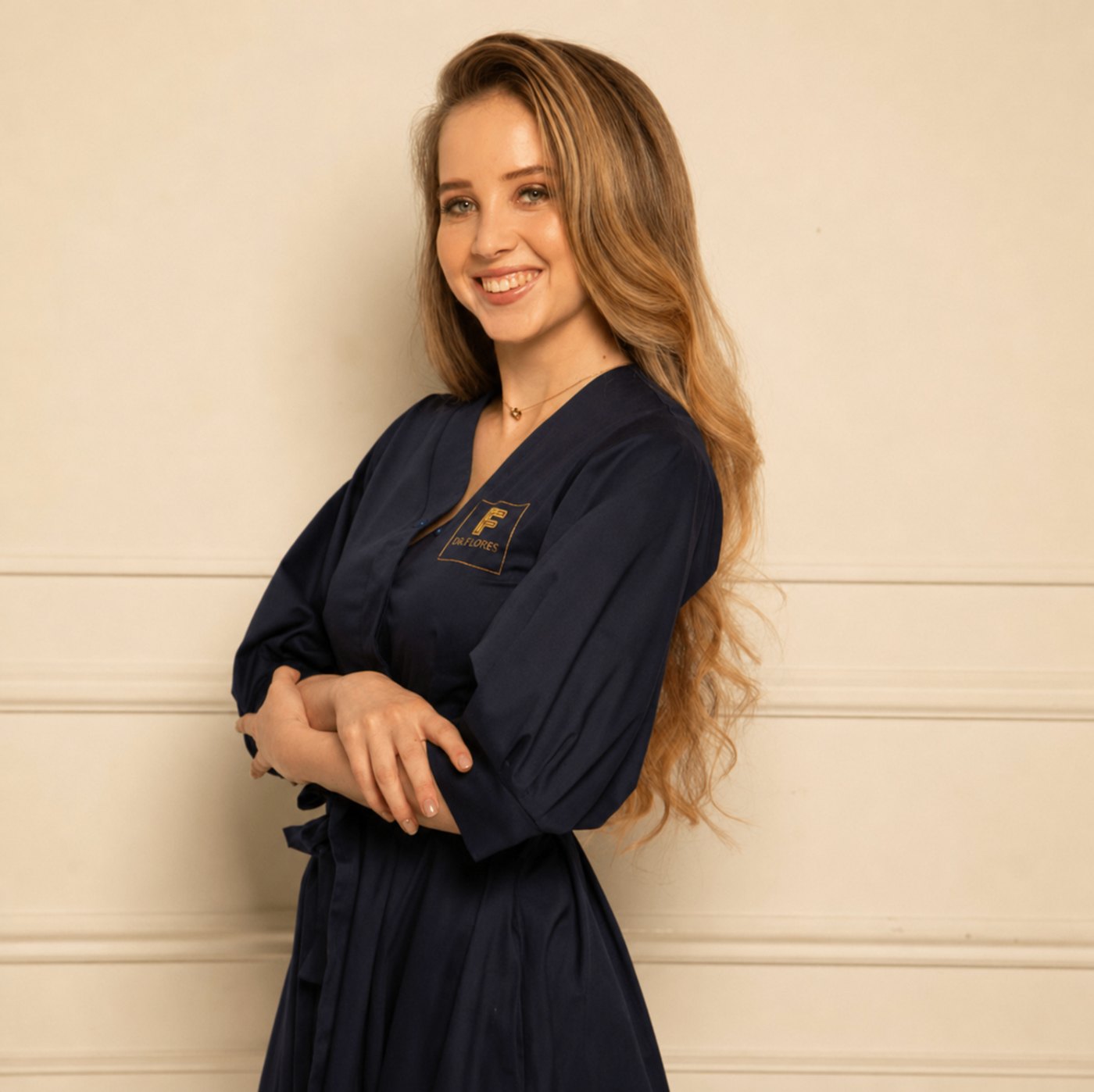
Eczema and atopic dermatitis are treated at our clinic by MUDr. Věra Víšková, a board-certified dermatovenerologist.
How the appointment works
- 1
A conversation about triggers — your environment, work, cosmetics, laundry products, the season, and whether atopy runs in your family.
- 2
Examination of the skin in its true state. For that reason, do not apply anything to the affected areas on the day of your appointment.
- 3
Assessment of severity and extent, and in children also of the impact on sleep and daily routine.
- 4
A treatment plan, with a detailed explanation of the daily care that goes with it.
- 5
A follow-up in four to six weeks; in severe cases we assess eligibility for biologic therapy.
Covered by Czech public health insurance for contracted patients. Full price list
Who performs the procedure
FAQ
Is eczema treatment covered by health insurance?
Yes. The examination and standard eczema treatment are covered by public health insurance for patients of our contracted insurers — VZP, VoZP, OZP, Škoda and ZP MV ČR. Emollients are usually paid for by the patient, though some can be prescribed. Biologic therapy has its own reimbursement rules, which we go through individually.
Do you treat eczema in children as well as adults?
Both. In children we most often see atopic dermatitis; in adults, hand eczema and atopy returning after years of calm. The approach differs with age — with children we focus on emollients and on teaching parents how to use them, with adults we also look for occupational and contact triggers.
Do you offer biologic therapy for eczema?
We assess whether biologic therapy is suitable for you, prepare the documentation and hand you over to a biologic therapy centre at a faculty hospital we work with — we do not administer the treatment itself. Your ongoing dermatological care is provided at our clinic.
Should I come without any creams on?
Yes. On the day of your appointment, do not apply ointments or emollients to the affected areas — the doctor needs to see the skin in its true state. Do not stop any treatment you are already on without agreeing it first.
How often will I come for follow-ups?
After treatment is started we usually see you again in four to six weeks to assess how it is working. Once the condition is stable, follow-ups move to every three to six months. With biologic therapy, follow-ups are regular and their schedule is set by the treatment protocol.