
Alopecia areata: what a sudden round bald patch can mean
Alopecia areata is an autoimmune condition that causes non-scarring hair loss. Its typical first sign is a sudden round or oval smooth bald patch. The skin usually has no scale or scarring. The condition is not contagious and is not caused by poor hygiene.
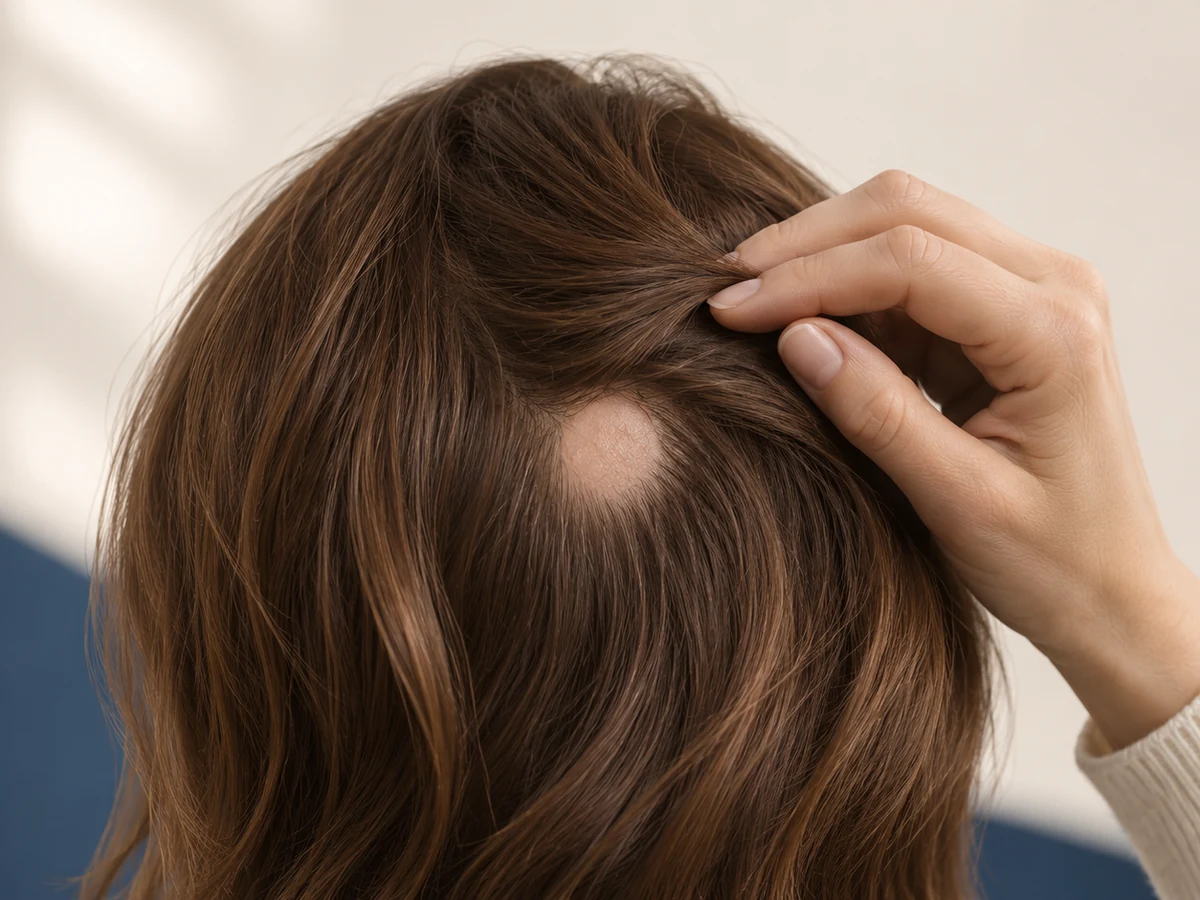
A smooth patch of sudden hair loss may be alopecia areata. Here is how dermatologists recognise it, what else can look similar and when specialist assessment is important.
The course varies. Some people develop one small patch and regrow their hair, while others develop new or more extensive areas of hair loss. A new bald patch should therefore be assessed by a dermatologist, particularly if it is growing quickly or affects the eyebrows or eyelashes.
What does alopecia areata look like?
The most common presentation is one or more clearly defined smooth patches without hair. Short tapered hairs may be visible at the edge. Some people notice itching, burning or tingling shortly before or after the hair falls out.
Alopecia areata may affect the scalp, beard, eyebrows or eyelashes, and occasionally larger areas of body hair. Small pits, ridges or increased brittleness of the nails may also occur.
Why does it happen?
In alopecia areata, the immune system mistakenly targets the hair follicle and temporarily interrupts hair growth. The follicle is usually not destroyed, so regrowth remains possible. The exact trigger is often unknown.
There is a genetic and autoimmune predisposition, and some patients also have other autoimmune or atopic conditions. Stress may precede a flare in some people, but alopecia areata should not be explained as “just stress”. It is not caused by a shampoo, ordinary diet mistake or lack of scalp care.
What else can a bald patch be?
Similar-looking hair loss can result from scalp ringworm, traction, hair pulling, inflammatory scalp disease or scarring alopecia. Scale, broken hairs, pain, pustules, crusting or disappearance of follicular openings suggest that another diagnosis may be present.
The distinction matters because treatments are different. A photograph or cosmetic hair analysis cannot replace a dermatological examination.
How is alopecia areata diagnosed?
The dermatologist asks when the loss began, how it has progressed, whether it runs in the family and whether there are other symptoms. The scalp, hair, eyebrows, eyelashes and, when relevant, nails are examined.
Digital trichoscopy magnifies and photographs the scalp and hair without cutting or shaving. It is painless and can reveal patterns that help distinguish alopecia areata from other causes. Stored images can be compared at follow-up visits.
Most patients do not need extensive tests. Blood tests or a small skin biopsy are considered only when the diagnosis is unclear or another condition is suspected.
How is alopecia areata treated?
Treatment depends on age, duration, extent, affected sites and the impact on everyday life. No single treatment works for everyone.
For one or two recent patches, observation may sometimes be appropriate because spontaneous regrowth can occur. When treatment is recommended, options may include anti-inflammatory medicines applied to the skin or injected into individual patches. More extensive disease may require specialist treatment, including targeted systemic medicines that modify the immune response.
Systemic targeted treatment is not suitable for everyone and requires careful assessment, monitoring and discussion of benefits and risks. DermatologyExpert provides initial dermatological assessment, digital trichoscopy, a management plan and referral to specialist care when indicated.
Will the hair grow back?
Hair regrows without treatment in some patients, especially when only a few patches are present and the condition has been present for a short time. The course remains unpredictable. New hair may initially be fine or pale before becoming thicker and regaining colour. Alopecia areata can recur after a period of remission.
Extensive or long-standing loss, hairline involvement, marked nail changes or onset in very young children can be associated with a less favourable course. A dermatologist should interpret these factors for the individual patient.
Book a visit to our hair clinic
Every Wednesday 8:30–14:00 · no referral needed
Book an examinationFAQ
Is alopecia areata contagious?
No. It is an autoimmune condition and cannot be passed by touch, shared towels or a visit to a hairdresser.
Is it caused by stress?
Stress may precede a flare in some people, but it is not the sole cause and many patients have no identifiable trigger.
Can the hair grow back on its own?
Yes, particularly with a few recent patches, but regrowth cannot be guaranteed and further episodes can occur.
Do vitamins treat alopecia areata?
Supplements are useful when a specific deficiency has been demonstrated. They do not treat the autoimmune process itself.
Is trichoscopy painful?
No. It is optical imaging of the scalp and hair with no needles, cutting or shaving.
Is alopecia areata treated with biologic therapy?
Targeted systemic medicines, particularly some JAK inhibitors, may be considered for severe disease. “Targeted therapy” and “biologic therapy” are not interchangeable terms, and suitability must be assessed by a specialist.