
Itchy scalp and dandruff: when it may be seborrhoeic dermatitis, eczema or psoriasis
An itchy scalp with white flakes often means dandruff or seborrhoeic dermatitis. Similar symptoms can also be caused by scalp psoriasis, contact dermatitis after hair dye or cosmetics, a fungal infection, or inflammation of the hair follicles. Marked redness, pain, oozing, crusting, pustules or patchy hair loss warrant a dermatological assessment.
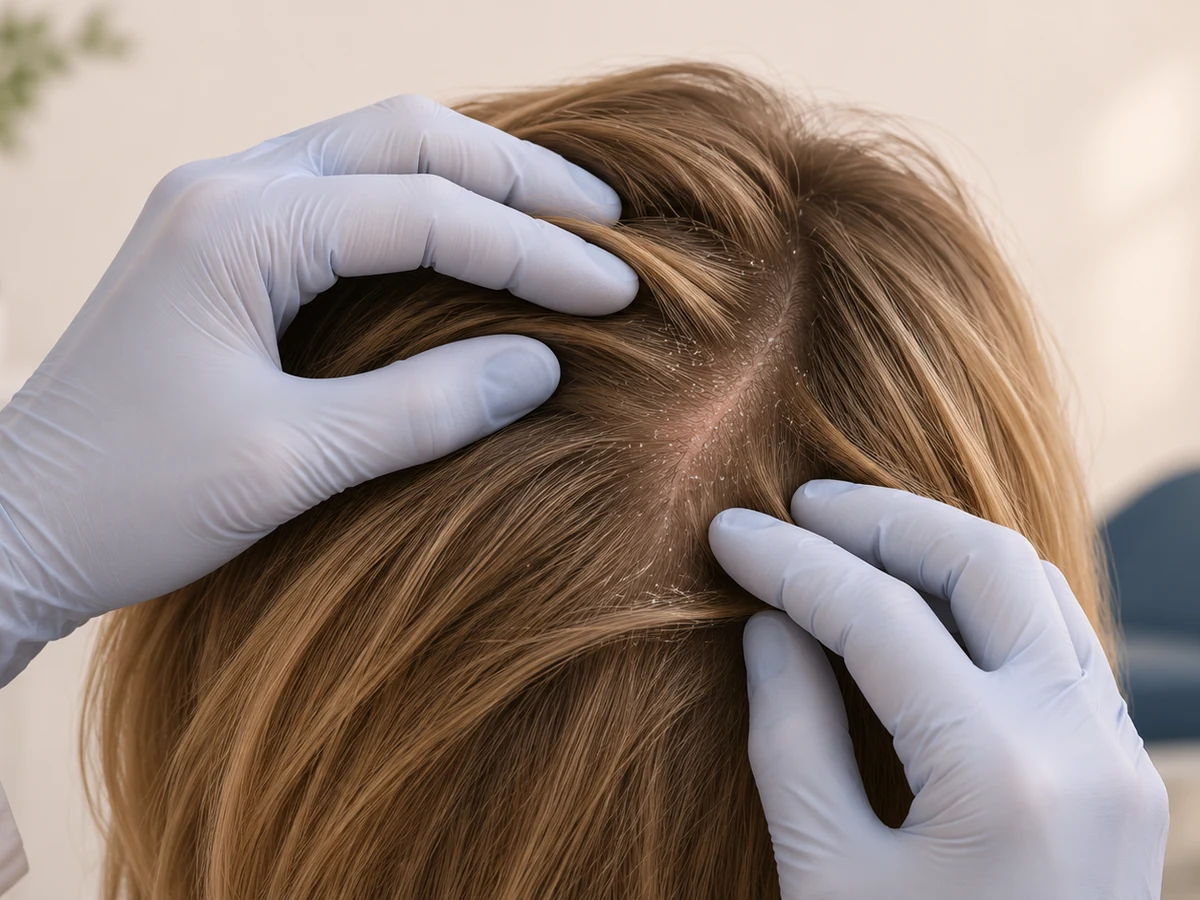
Dandruff and itch are common, but similar symptoms can have different causes. Scale, redness, pain and patchy hair loss help guide the diagnosis.
Dandruff is not a sign of poor hygiene, and seborrhoeic dermatitis is not contagious. The correct diagnosis matters because a universal “itchy scalp shampoo” may not address the cause.
Dandruff and seborrhoeic dermatitis
Dandruff can be considered a milder form of scalp scaling. In seborrhoeic dermatitis, the skin is also inflamed and itchy and may look red or different in colour from the surrounding skin. Scale may be fine and white or greasier and yellowish.
Seborrhoeic dermatitis commonly affects the eyebrows, folds beside the nose, skin behind the ears or centre of the chest. It is associated with the skin barrier, an inflammatory response and Malassezia yeast, which normally lives on human skin. The condition tends to recur, with stress, fatigue and cold dry weather contributing to flares in some people.
Other common causes
- Scalp psoriasis: Psoriasis tends to form thicker, clearly defined plaques with silvery-white scale. It may extend beyond the hairline onto the forehead, neck or behind the ears. Plaques on the elbows or knees and nail changes provide additional clues. Psoriasis and seborrhoeic dermatitis can overlap.
- Contact dermatitis: This may follow hair colouring or a new shampoo, spray, gel or other product. The scalp can become intensely itchy, red, sore or swollen, sometimes with blisters or oozing. Stop using a suspected new product and seek medical help according to the severity of the reaction.
- Fungal infection of the scalp: Scalp ringworm is more common in children. It can cause irregular scaly patches, broken hairs, patchy thinning or a painful inflamed lump. Diagnosis may require microscopy or culture, and shampoo alone is usually not sufficient treatment.
- Folliculitis: Inflamed follicles cause pustules, spots, soreness, burning and crusting around individual hairs. Recurrent or scarring disease needs assessment because some forms can cause permanent hair loss.
- Atopic eczema and dry irritated skin: The scalp may be dry and very itchy and may react poorly to fragranced or harsh products. Eczema may also be present on the eyelids, face, neck or skin folds.
What can you safely try at home?
For mild dandruff without pain, oozing or hair loss, a pharmacy anti-dandruff shampoo may be reasonable. Active ingredients and instructions differ, so follow the product information or a pharmacist’s advice. Some medicated shampoos need to remain on the scalp for several minutes and be used regularly for a defined period.
Wash gently, avoid scratching with the nails, temporarily reduce new styling products and dry shampoo, and avoid combining several medicated products without a plan. Do not use strong topical steroids, antibiotics or antifungals long-term without a diagnosis and medical supervision.
How does a dermatologist examine the scalp?
The doctor asks how long symptoms have been present, which products and hair dyes have been used, whether other body sites are affected and whether there is hair loss. The scalp, hairline, ears, face, nails and other relevant areas are examined.
Trichoscopy magnifies the scale, follicular changes, follicular openings and broken hairs. If fungal infection is suspected, samples can be taken for mycology. A small skin biopsy is occasionally required for an unclear or unusual condition.
Treatment depends on the cause
Seborrhoeic dermatitis is usually managed with medicated shampoos and, when inflamed, a short course of anti-inflammatory scalp treatment. Maintenance treatment may be needed because the condition can recur.
Psoriasis requires a different regimen and sometimes assessment of disease elsewhere on the body. Contact dermatitis is managed by identifying and avoiding the trigger and treating inflammation. Scalp ringworm usually requires targeted prescription treatment. Folliculitis is treated according to its cause and severity.
The aim is not only to remove flakes but to identify why they form, reduce recurrence and protect the hair follicles.
Book a visit to our hair clinic
Every Wednesday 8:30–14:00 · no referral needed
Book an examinationFAQ
Is dandruff caused by poor hygiene?
No. It may be more visible when hair is washed infrequently, but it is not caused by a “dirty scalp”.
Is seborrhoeic dermatitis contagious?
No. Malassezia normally lives on human skin; the condition reflects the skin’s response rather than transmission between people.
How can I distinguish seborrhoeic dermatitis from psoriasis?
Seborrhoeic dermatitis tends to have finer white or yellowish scale and less sharply defined edges. Psoriasis usually produces thicker, well-defined plaques and may extend beyond the hairline. Overlap can occur, so examination is useful when the diagnosis is uncertain.
Can dandruff cause hair loss?
Ordinary dandruff does not usually cause permanent hair loss. Severe inflammation, scratching, infection or another scalp disease may cause temporary loss, and some scarring disorders can cause permanent loss.
How long should I try an anti-dandruff shampoo?
Follow the instructions for the specific product. If symptoms do not improve within a few weeks or are getting worse, arrange an assessment.
Should I wash my hair before trichoscopy?
Wash it the day before, not on the day of the visit, and avoid hairspray, gel and dry shampoo.