
Hair loss: normal shedding or time to see a dermatologist?
Losing roughly 50 to 100 hairs a day is a normal part of hair renewal. It is worth seeing a dermatologist if your hair falls out noticeably more for longer than a few weeks, visibly thins, a bald patch appears, or your scalp itches, hurts or is red.
Hair falls out naturally every day. How can you tell when it is no longer normal renewal, but a problem worth having examined?
How many hairs a day is normal
Each hair goes through a cycle: it grows for several years, then stops growing and, after roughly three months of rest, falls out. A new hair starts growing in its place. That is why losing about 50 to 100 hairs a day is normal. You will notice more on days when you wash your hair or brush it after a longer break. Some people also shed more in autumn.
Normal shedding or a problem?
Probably normal shedding:
- hair in your brush and in the drain after washing, but your hair density is unchanged,
- your ponytail or braid is as thick as before.
Probably a reason to get examined:
- hair has been falling out noticeably more than usual for longer than 6–8 weeks,
- the crown shows through, your parting is widening or your hairline is receding,
- a clearly defined bald patch has appeared,
- hair breaks or has become thinner,
- your scalp itches, flakes or is red.
The most common causes
- Telogen effluvium: increased shedding about 2–3 months after a strain on the body, such as childbirth, an illness with fever, surgery, rapid weight loss or stress. It usually settles on its own within six months.
- Androgenetic alopecia: gradual, hereditary thinning. In men typically at the temples and crown, in women as a widening parting.
- Alopecia areata: sudden round patches without hair, sometimes also in the beard or eyebrows.
- Scalp inflammation: for example seborrhoeic dermatitis or psoriasis.
- General causes: iron deficiency, thyroid disorders or certain medicines.
- Traction: long-term tight ponytails, braids or hair extensions.
Causes often combine and can look similar. That is why we start with an examination, not generic advice.
How the examination works
- 1Consultation: when the shedding started, what preceded it, illnesses, medicines, supplements and family history.
- 2Scalp and hair examination with a simple pull test: the doctor gently pulls a small strand of hair and judges from the number of hairs released how active the shedding is.
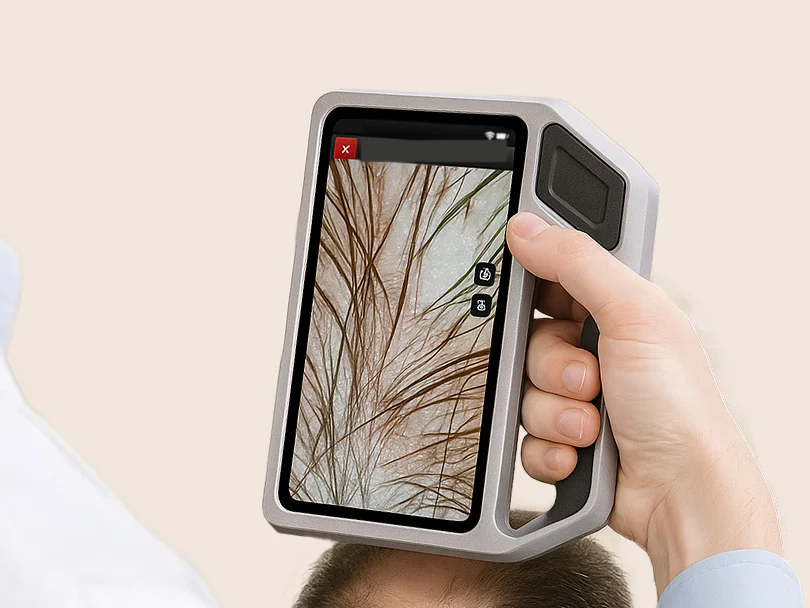
- 3Digital trichoscopy: magnified images of your hair and scalp, 30 minutes, no shaving. The images are also used for comparison at follow-up visits.
- 4Blood tests if needed – most often a full blood count, iron stores (ferritin) and thyroid hormones, and depending on the situation vitamin D, zinc or other hormones. Blood is taken at the laboratory right next to the clinic.
- 5Explanation of the cause and a treatment plan.
What you can do before the examination
- Wash your hair the day before, not on the day of your visit, and do not use hairspray, gel or dry shampoo. If possible, do not colour your hair just before.
- Write down the medicines and supplements you take.
- Note when the shedding started and what preceded it.
- Do not start high-dose supplements on your own. Too much of some substances, such as vitamin A, can actually make hair loss worse.
Book a visit to our hair clinic
Every Wednesday 8:30–14:00 · no referral needed
Book an examinationFAQ
Is it normal to lose more hair in autumn?
For some people, yes. If increased shedding lasts longer than 2–3 months or your hair is visibly thinning, get examined.
Can stress cause hair loss?
Yes. Significant mental or physical strain can trigger telogen effluvium, usually 2–3 months after the event. It mostly settles on its own, but other causes should be ruled out.
Do I need a referral from a GP?
No, you can book directly. Bring any blood test results or medical reports from recent months.
Will supplements help?
Mainly when your body is genuinely lacking something, such as iron. That is why it is better to find the cause first.
Is the examination covered by public health insurance?
No. The initial examination with digital trichoscopy costs CZK 2,500.